Half Pan helps kitchens throw out less food.
Before food goes in the trash, the crew weighs it and taps what it was and why. The next shift starts with that number and one thing to do differently. It's free.
What it could save
4 to 10%
of the food a kitchen buys is thrown out before it reaches a customer's plate. Leanpath
50%
of a kitchen's food waste is overproduction: food that was cooked and never served. Leanpath
26%
less kitchen food waste within a year, on average, at 114 restaurants in 12 countries that started programs to cut it. Champions 12.3, 2019
$7
saved for every $1 those restaurants put in. Champions 12.3, 2019
Try it with your kitchen's numbers.
Your kitchen, roughly
- Food bought in a year
- $390,000
- Thrown out, at 4 to 10%
- $15,600 to $39,000
- Saved a year if waste drops 26%
- $4,056 to $10,140
How it's figured
$7,500 a week times 52 weeks is $390,000 a year. Leanpath puts kitchen waste at 4 to 10% of what a kitchen buys: $15,600 to $39,000. Restaurants in the Champions 12.3 study cut their waste 26% in a year, which would save $4,056 to $10,140.
ESTIMATE, NOT A QUOTENOTHING IS SAVED
A real number takes two weeks of weighing. Sources
What the crew does
- Weigh it
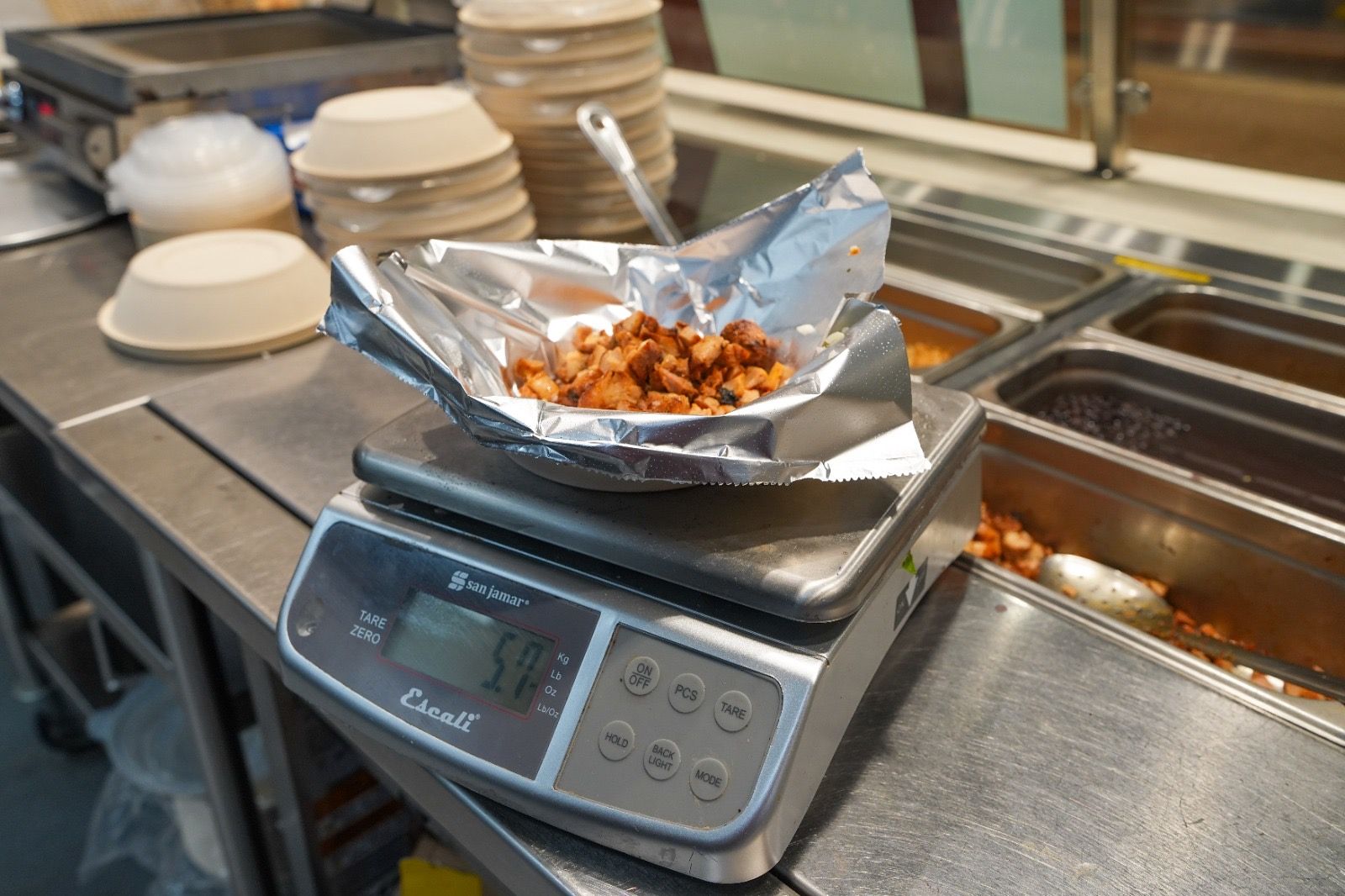
- Before anything goes in the trash, it goes on a scale next to the bin. Pans from the line, prep trim, whatever spoiled in the walk-in.
- Tap why
- On any phone: what it was, what it weighed, and one of six reasons. It takes about ten seconds and still saves with no signal.
- Huddle
- The next shift starts with last shift's number, the top reason, and one thing to change. It takes under a minute, in English, Spanish, or Telugu.
- Train
- Four short booklets with a quiz teach the crew why it matters, how to fix each reason, and how to hold and share food safely.
Last shift's waste, weighed on a scale before it hit the trash.
One square for every weigh-in the kitchen expected. A hollow one never came in, so the real number is a little higher.
The one thing the crew does differently this shift.
Try it
This is the screen the crew uses. Tap what it is, add the weight, pick why, and save. Log a few and watch the next shift's huddle write itself. Switch languages at the top. Nothing leaves this page.
Save a log and the next shift's huddle shows up here, written from your numbers.
Since midnight, the United States has thrown out
pounds of food.
Our estimate: Alabama's share of the U.S. population, about 1.5%, applied to the U.S. figure.
UNEP Food Waste Index 2024: 1.05 billion tonnes of food wasted a year.
The U.S. number is ReFED's 2026 estimate of 70 million tons of surplus food a year, spread evenly over every second since your midnight. It is a model, not a measurement. The numbers kitchens weigh themselves are on their own pages, with every missed log showing.
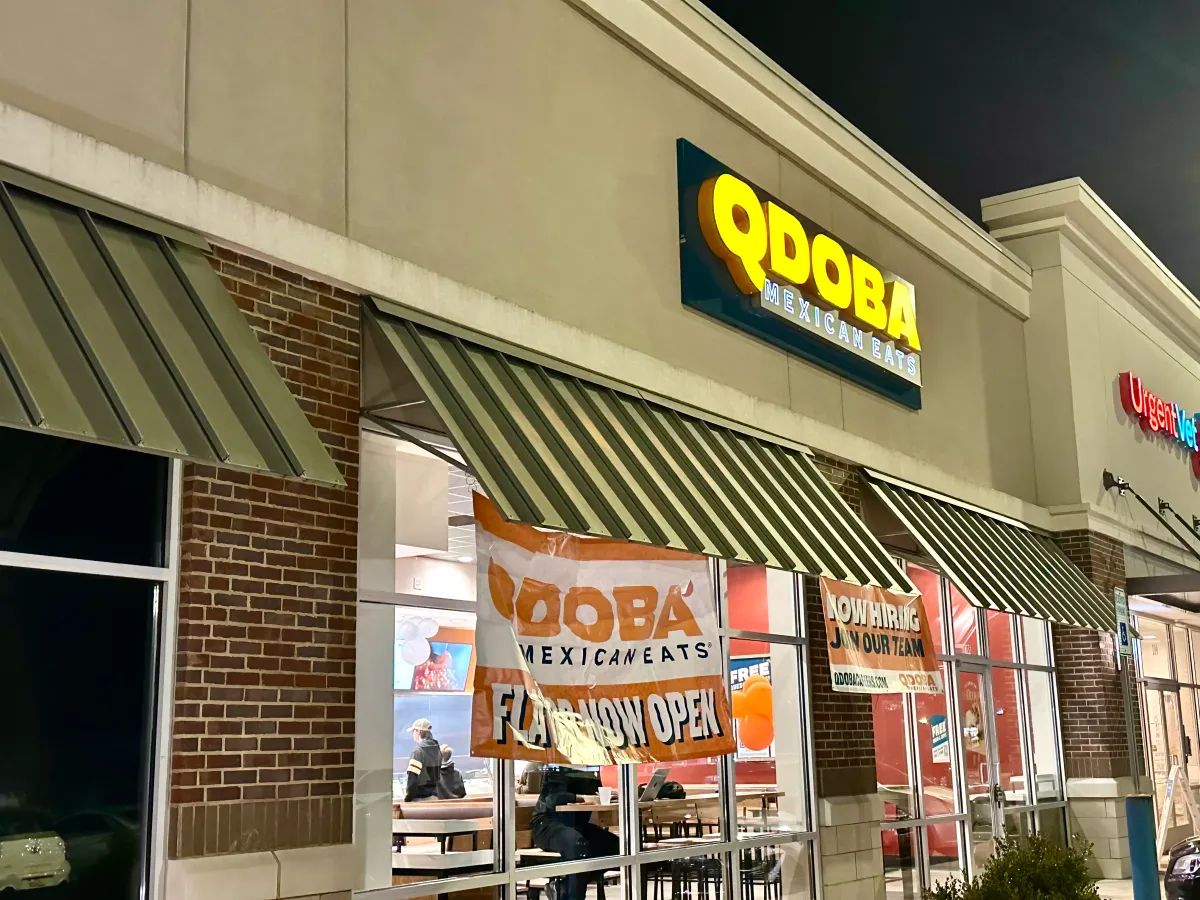
It starts at the Qdoba in Hoover
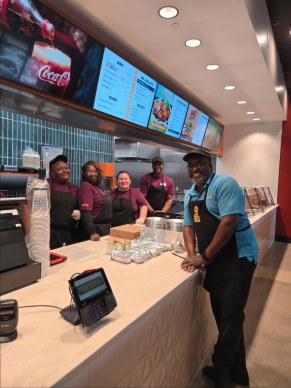
The first kitchen on Half Pan is the Qdoba in Hoover, Alabama. Two or three people work the line on a shift, and between them they speak English, Spanish, and Telugu. That's why the app and the training come in all three.
The plan is to post their numbers here, missed logs and all.
Why it's called Half Pan
A half pan is the smaller steel pan on a food line, half the size of a full one.
On a slow afternoon, a full pan of rice can sit until it's past its time and gets thrown out. Cooking into a half pan means smaller batches, made more often, and less in the trash at close. That's the kind of fix this app is meant to find: one change, small enough to try on the next shift.
Full pan12 x 20 in
Half pan12 x 10 in
Built for any kitchen
Pick your kind of kitchen when you set up, and the crew gets a starter list of the foods kitchens like yours throw out most. Change it any time: add your own items, pin the ones you log most, paste a list, or have AI build one from your menu. Weigh food in the pan and the app takes the pan off. Count muffins instead of weighing them.
Kitchens that aren't restaurants get tools that fit them: how many to cook for at a temple's Sunday meal or a shelter dinner, tray scores for a school, a use-first list and temperature log for a food pantry, and a pan clock that says what can be donated.
Mexican fast casual, Pizza, Burgers and grill, Chicken and wings, Chinese and Asian, Indian, Sushi and Japanese, Mediterranean and Middle Eastern, Café and bakery, BBQ and Southern, Sandwich and deli, Buffet and catering, School cafeteria, Soup kitchen or shelter, Temple or community kitchen, Concession stand, Hotel breakfast, Food pantry, Hospital or care facility, Senior center or Meals on Wheels, or anything else.
Money and donations
Rebates, loans, and grants for kitchens around Birmingham and Hoover, and how to donate leftover food safely. Every item is checked against its own website, with the date.
How much does it cost?
Nothing. Half Pan is free and has no ads. The only thing to buy is a kitchen scale, which runs about $30.
What do we need?
A digital scale that reads to 0.05 lb and holds about 30 lb, a bin with a lid next to it, and any phone with a browser. There's nothing to download.
Will it slow the line down?
A log takes about ten seconds. If a shift throws food out five times, that's under a minute of logging for the whole shift.
Who can see our numbers?
Only people with your site code and PIN, unless the owner turns on publishing. Public pages never show notes, photos, sales, or names.
How is it different from Leanpath or Winnow?
Those are paid systems with smart scales or cameras, built for big operations like hotels, hospitals, and chains. Half Pan is free and runs on a regular scale and the phones a crew already has, so it fits small kitchens.

Who started it
Sai Vajaha, from Hoover. He worked at his family's Qdoba, saw how much food got thrown out and why, and started Half Pan to help stop it.
Weigh your first pan this week
Setup takes about a minute. Print the kit, put a scale by the bin, and start the two-week baseline.